is microwave tea actually bad?
APR 04, 2026
inkhaven, science
Gwern is convinced that microwaved tea is bad. He has a couple of theories as to why, most of which depend on the fact that microwaving water leads to fewer bubbles.
But Benjamin Sturgeon says he likes to put boiling water with tea in the microwave. I've put herbal teabags in microwaved water, and never noticed a difference. We were not convinced that microwaved tea is actually bad.
science!
So we ran some (2) studies! We compared the following methods:
Method 1 (Kettle): Boiling water was poured over the teabag, then left to sit for 30 seconds.
Method 2 (Ben's Method): Boiling water was poured over the teabag, then microwaved on full power for 30 seconds.
Method 3 (Microwave): Teabag was placed in room temperature water, then microwaved on full power for 3 minutes.1
All three were steeped for the same amount of time (~2-3 minutes), then stirred for 10 seconds each. Each tea was then poured out into separate mugs, which were grouped by pour order.
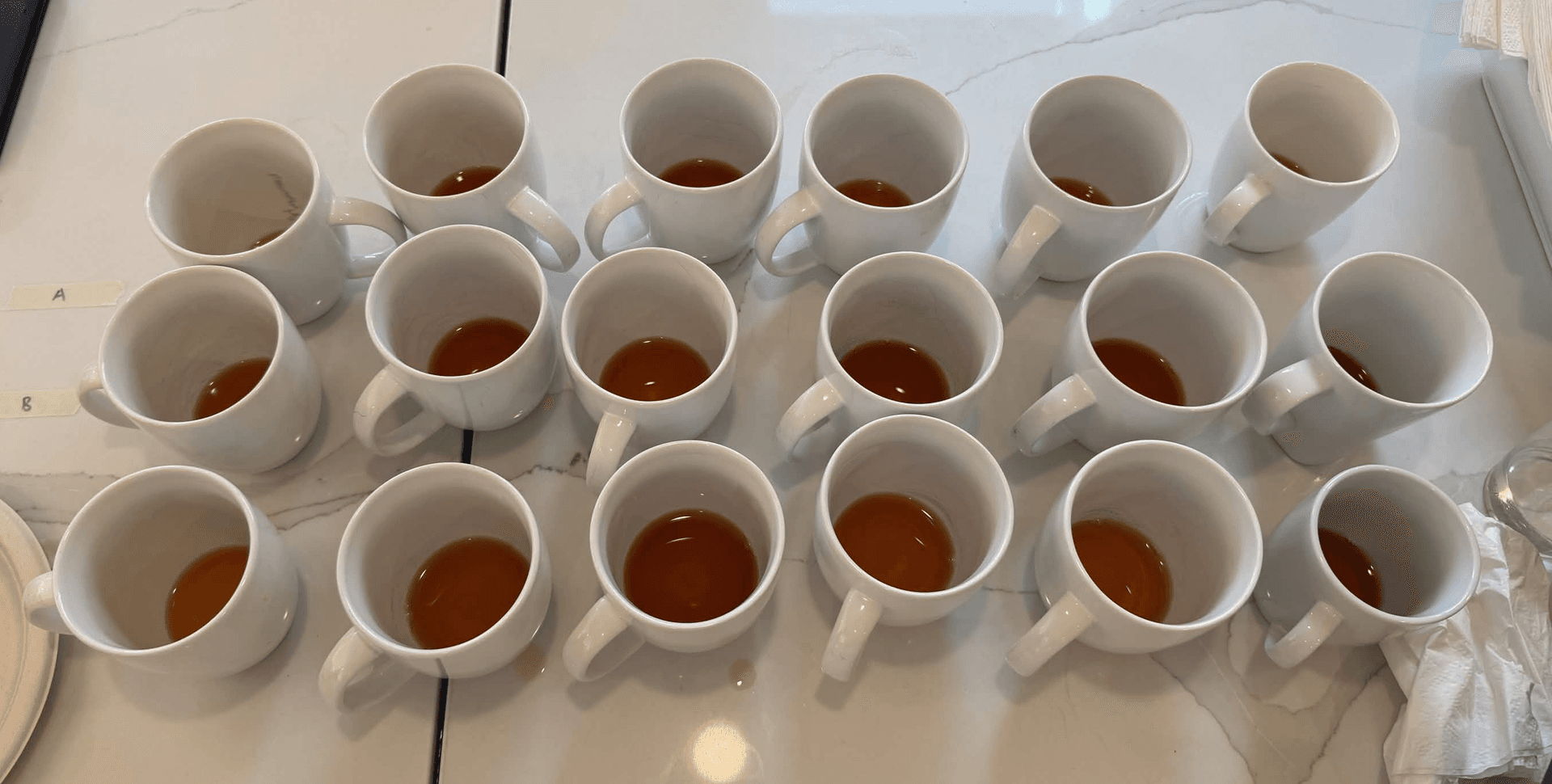
Study A
In Study A, we prepared rooibos2 tea using the three different methods, and asked people what they thought about it.
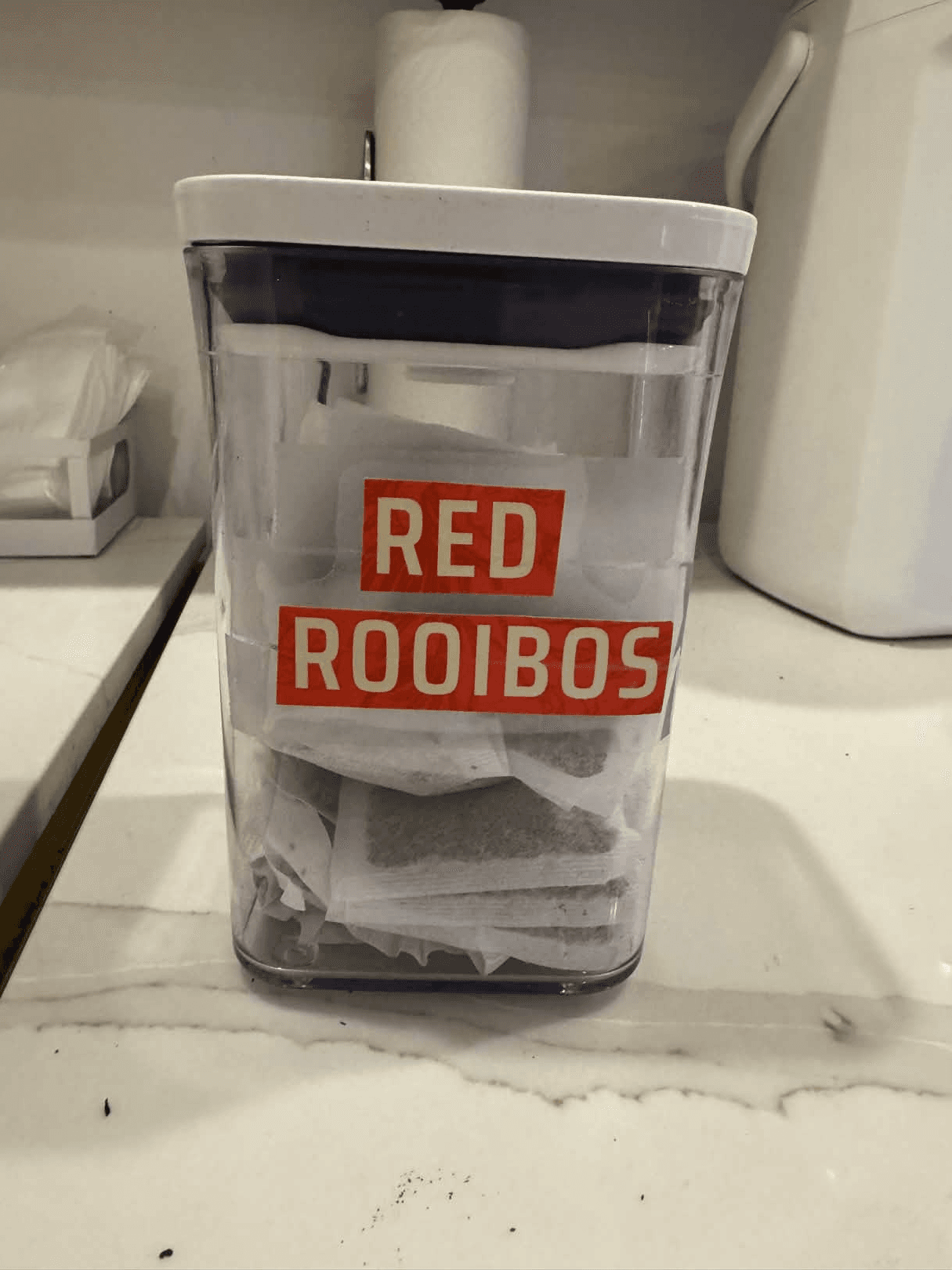
We asked for prior assumptions about microwaved tea, if any, and asked them to rate each tea out of 7 (where 7 is the best). Virtually everyone tasted the teas in order 1, 2, 3. People were free to retaste any of the teas and update their ratings.
Study A had some limitations: it was only single-blind, participants could hear other participants's opinions, and participants were asked whether they had opinions about microwave tea before or as they were tasting. Also, rooibos tea might not be what Gwern means by "tea", since he mentions brewing tea with tea leaves in particular.
Study B
In Study B, we re-ran Study A with black tea and some improvements.
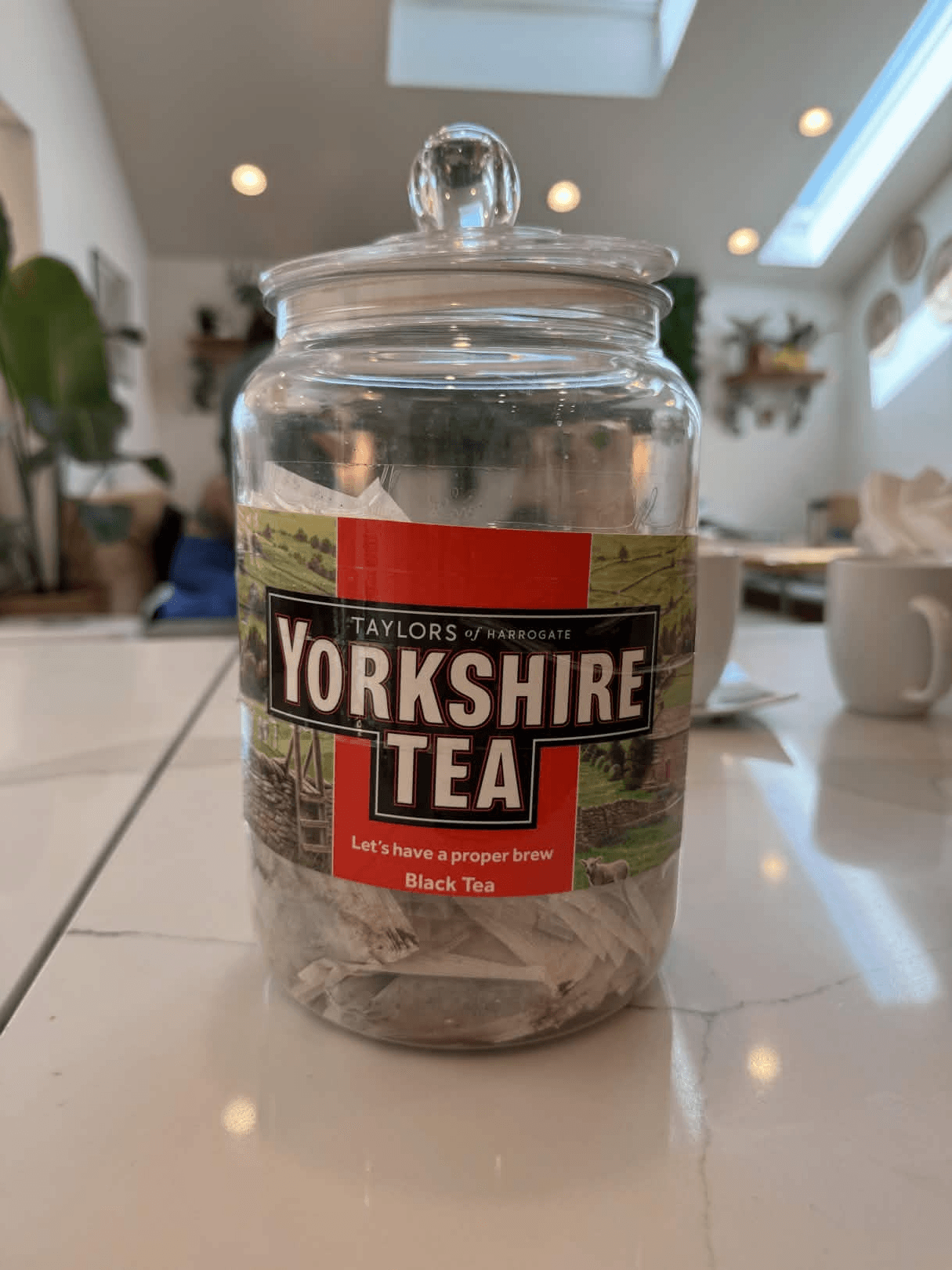
As in Study A, the three teas were prepared and poured out the same way as in Study A, and participants were asked to rate the teas on a 7-point scale. In addition, Study B was double-blinded. Also, participants were surveyed separately from other participants, and only asked about their microwaved tea opinions after giving ratings.3
results
So, what did we find?
Study A
We recruited 6 participants for Study A. Most people didn't have strong opinions on microwaved tea, though one participant (Jasmine) mentioned that they switched away from microwaving to make their friend happy. Here are the results:
| Method | Mean Rating | Variance |
|---|---|---|
| Kettle | 4.00 | 0.40 |
| Ben's Method | 3.67 | 1.47 |
| Microwave | 4.17 | 2.57 |
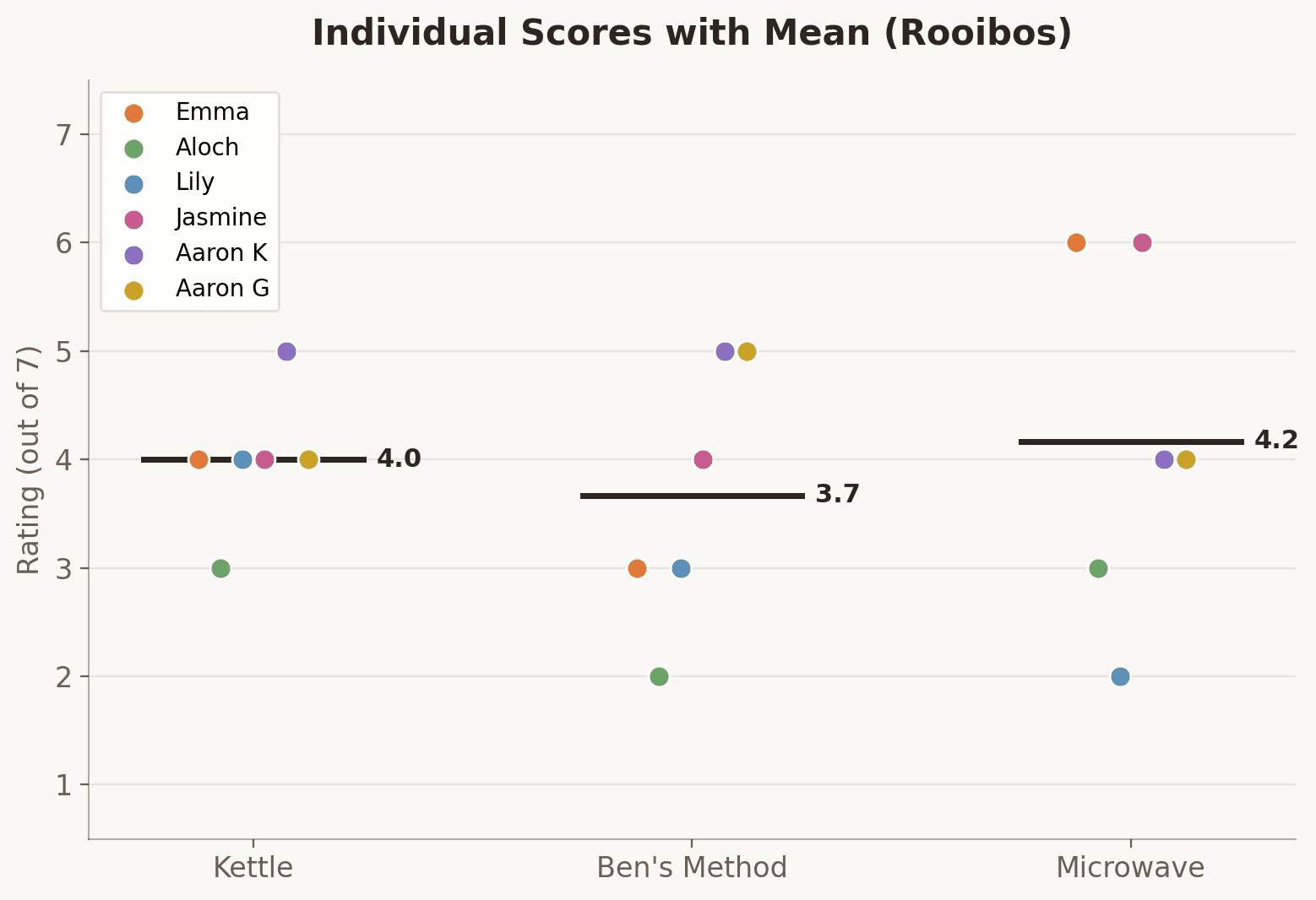
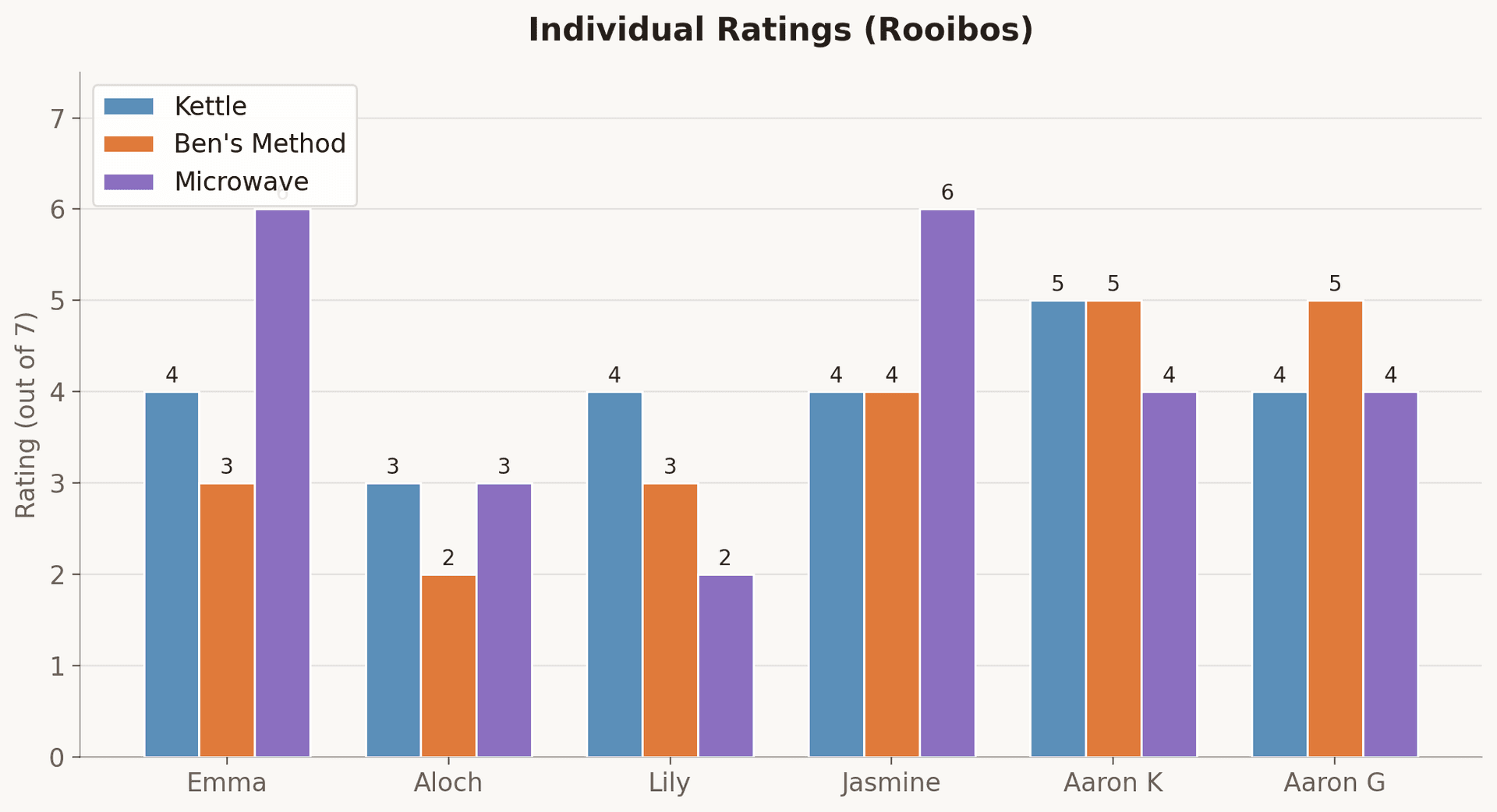
There wasn't a noticeable difference between the three methods, though the ratings for the microwaved tea were quite varied compared to that of the kettle tea.
Study B
For Study B, we recruited 10 participants. None of the participants had strong personal opinions on microwaved tea, though 2 participants (Georgia, Henry) noted larger social attitudes against it. 3 participants (Georgia, Clara, Benjamin) implied that they brew tea on a regular-ish basis. In the following data, we have dropped one participant (Jasmine), because she had already participated in Study A and gave all three black teas an outlier rating of 1.
| Method | Mean Rating | Variance |
|---|---|---|
| Kettle | 3.00 | 3.00 |
| Ben's Method | 3.67 | 2.25 |
| Microwave | 3.00 | 2.25 |
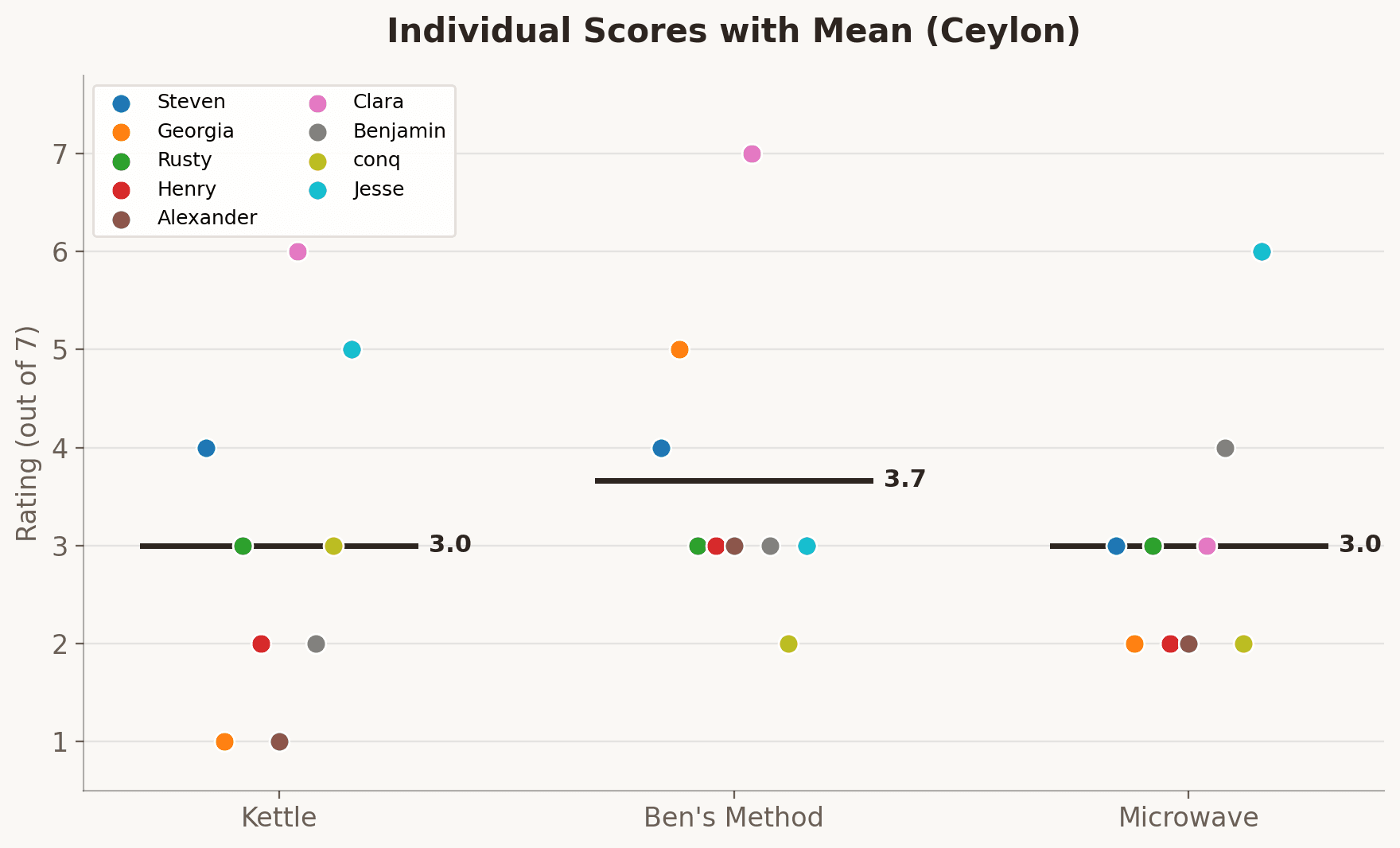
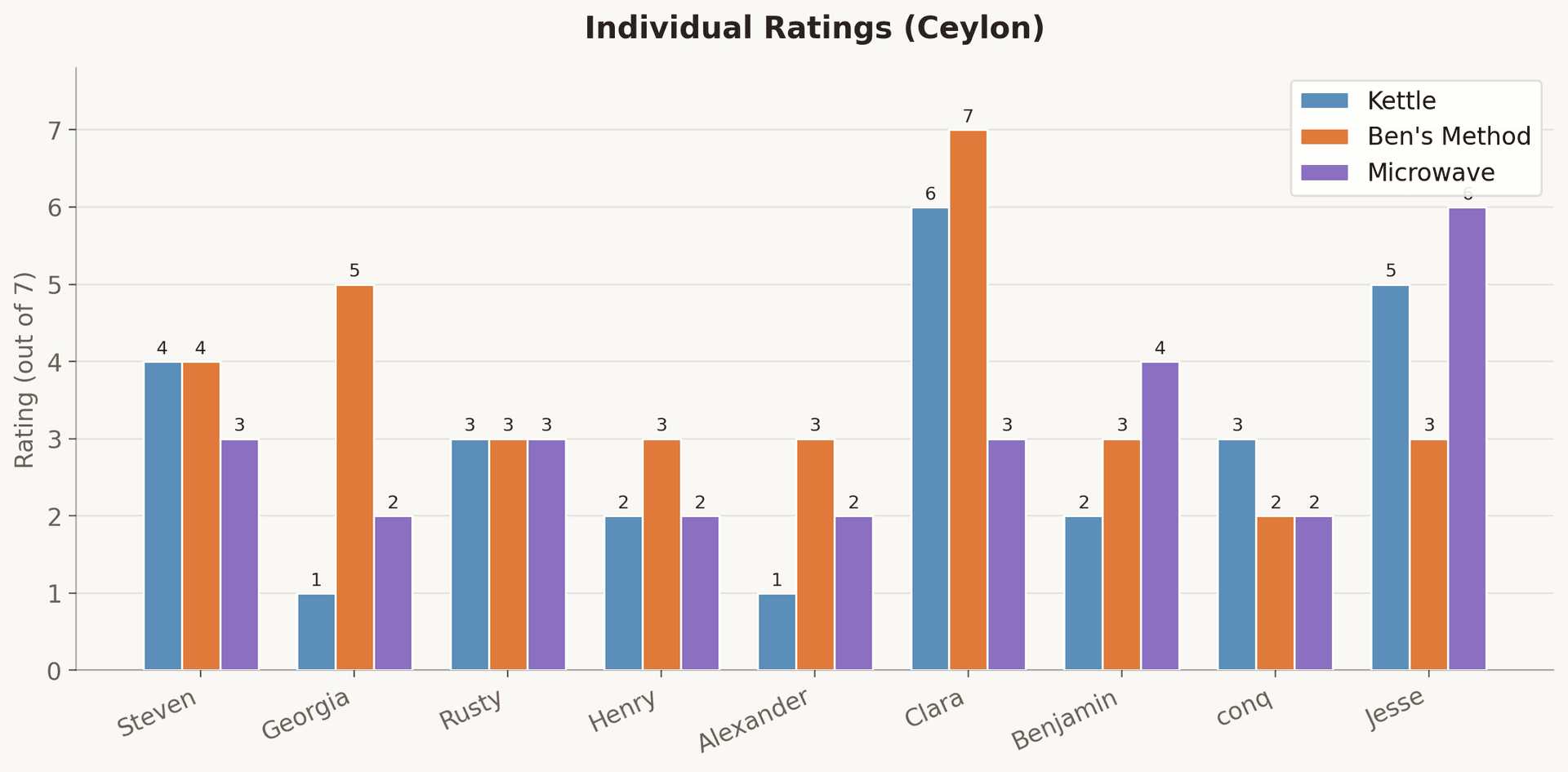
People didn't like the straight black tea as much as the rooibos, even after we dropped Jasmine's ratings. However, as in Study A, there wasn't a huge difference between the ratings between the methods. The average ratings were all within one point of each other, and microwave tea performed just as well as kettle tea.
is gwern wrong?
On the whole, it doesn't seem like microwaved tea is really that bad compared to kettle tea. Both microwaved tea and Ben's method tea had ratings that were on par with kettle tea, and kettle tea wasn't the best-rated tea in either study! Even though the sample size is small, we think we can say that microwaved tea is not as universally bad as Gwern thinks.
There are some limitations to the study, though. For example, it is possible that tea straight out the microwave is actually bad, but the stirring and pouring we did in our preparation was what made it not bad. This would track with both of Gwern's theories, which both hinge on the fact that microwaving does not introduce enough bubbles. It is also backed up by the fact that stirring the microwaved tea generated frothy bubbles in both Study A and Study B—perhaps these bubbles were enough to fix the taste. But still: if microwaved tea is so easily fixed, it doesn't seem as bad as its reputation implies. We would be excited to see more study on microwaved tea straight from the microwave (no stirring, no pouring).
Another limitation was that most our participants were not regular tea-drinkers. It could be the case that the difference between kettle tea and microwaved tea is just too subtle for non-tea drinkers to notice. Clara, who showed strong tea knowledge,4 differentiated pretty clearly between microwaving and the other two methods. She gave kettle and Ben's method a 6 and 7, respectively, while giving microwaved tea a rating of 3. But then again, Benjamin (the study participant, not Benjamin Sturgeon) also drinks tea and rated microwaved tea the best of the three. We just didn't have enough tea people to make a strong statement here.
Still, we think that you should try stirring your microwaved tea before committing to buying a kettle.
This post was created as a part of THE LOOP 3, a scientific zine run by SLIME MOLD TIME MOLD.
Thanks to Benjamin Sturgeon for brewing tea and charts, Emma Baker for also helping with the tea brewing, and Valentino of Slime Mold Time Mold for helping make Study B better. Also, thanks to all the participants for tasting the tea!
footnotes
- 1
We observed that the microwave tea only started boiling at the 2 minute 30 second mark.
- 2
Why rooibos? Well, rooibos is brewed at a high temperature, the same as black tea, but is palatable without add-ins like milk or honey.
- 3
However, since Study A had already been conducted (quite publicly), we could not guarantee that participants were not aware of the microwave tea hypothesis.
- 4
She noted that she is careful about water temperature as to not scald the leaves.