mother tongue
APR 12, 2026
inkhaven
i was born in america, but i spoke only korean for the first couple years of my life. i followed my mom to korean grocery stores. i went to korean preschool, where i learned to perform traditional korean dances (or at least, a toddler's approximation of traditional korean dances). i watched korean-language educational shows,1 instead of barney or sesame street.
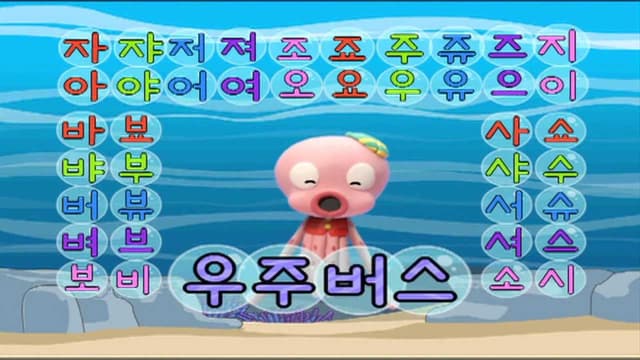
barney has nothing on this guy
it is entirely possible that i did not comprehend that people could speak english.
the illusion was intentional. my mom wanted me to be 100% korean and 100% american, and she knew there was going to be a lot of america in my life. so she tried her best to speak only korean to me, and continued to do so even as i learned english myself. she was good at it, too. she tells me that the first time she slipped, i looked at her so confused, as if i couldn't conceive of the notion that she might be able to speak english.
but we lived in america, so of course she did. and once i learned that english was a thing, i picked it up pretty quickly, as kids do at that age. by the time i was in kindergarten, i was conducting all of my very important socializing in english. despite that, i was placed in esl (english as a second language) classes throughout elementary school because my file listed korean as my first language.
at least when we went to korea to visit family, i was the wonder who spoke english without a hint of an accent. the american one, if you will. it was uncanny for a young kid to be speaking english back then, which led to fascination from the adults. my uncles would wonder how i could talk without an accent. the lady who ran the convenience store below my grandparents' apartment knew me as the girl from america who spoke perfect english.
being in korea was great for my korean. my relatives only saw me once a year at best, so naturally, they had plenty of things to ask me. i practiced answering regular old-people questions like "how's school?" as well as "what are things like in america?"-type questions. after a couple of weeks there, my mom would always comment that my korean had gotten better.
still, by the time i was in middle school, english was my main mode of communication. how could it not be, with all my classes in english and my friends all speaking english? (i tried to make friends with the 1.5-gen kids, but failed because i was too socially inept.) i slipped into the classic receptive bilingual pattern—my mom would talk to me in korean, and i would respond in english.
part of the problem was that my mom was too good at english. her english is so good that everyone thinks she's a native speaker. no one ever suspects that she moved to america after graduating from university.
but i can't blame her, just the inertia from living life in english.
as i got to college, i started to worry that i would lose all of my korean. i wasn't at home anymore, so my exposure to korean had dropped to near zero. i had maybe two friends who spoke any korean at all, and we rarely used it, since the rest of the group spoke english. i briefly looked into the korean culture club, but my aversion to drinking meant that it wasn't going to be for me. besides, i figured it would be the same as trying to make friends with the 1.5-gen kids.
instead, i booked myself to study abroad in korea, at my mom's alma mater. i took two classes: korean-american history and korean language, the latter of which was at the university's korean language institute.
during the oral section of the placement test, the examiner had me introduce myself. upon hearing me answer, she flipped past three pages in her evaluation booklet, and asked me to describe my position on capital punishment. (spoiler: i didn't give a great response, but i swear it was less about the korean and more about not having a solid position to begin with.)
still, they placed me in the highest-level class, the one they had frantically made for kids like me. the class was a mix of korean citizens attending foreign universities and second-generation korean immigrants. we were woefully ahead of the available material. the teacher frequently joked that none of us had any business taking a korean language class, and i can't say she was wrong.
i never really clicked with my korean language classmates, though. (maybe i was too socially inept.) the people i actually hung out with were the random people i had met in the convenience store on day 1, who were all americans…actually wait, i think there was one aussie. in any case, i spoke mostly english, outside of korean language class and ordering food.
when i came back to america, i worried that i had lost my chance to ever make korean-speaking friends. but a couple years later, i found myself closer to those two friends who speak korean. nowadays, we switch between them freely and teach other friends who are willing to learn.
maybe i am 100% korean and 100% american as my mom intended. i'm just as prone to saying "wait a minute this word doesn't exist in english" as i am to google "___ in korean". i think in mostly english, but my response to touching a hot pan is "앗 뜨거!", without fail.
but i can tell that without the effort, my tongue will default back into the easy patterns of english. my ears will forget to listen for korean speech, and my brain will reindex itself, surfacing english over korean even more than it does now.
so i call my mom, who was the first to teach me my mother tongue.
여보세요? hello?
잘 있니? how are you?
응 잘 있어. 엄마는? i'm doing well. how about you, mom?
footnotes
- 1
shoutout to 한글이 야호